SKU: OT450-C91 Numéro d’article: AA020 EAN: 4504087796505

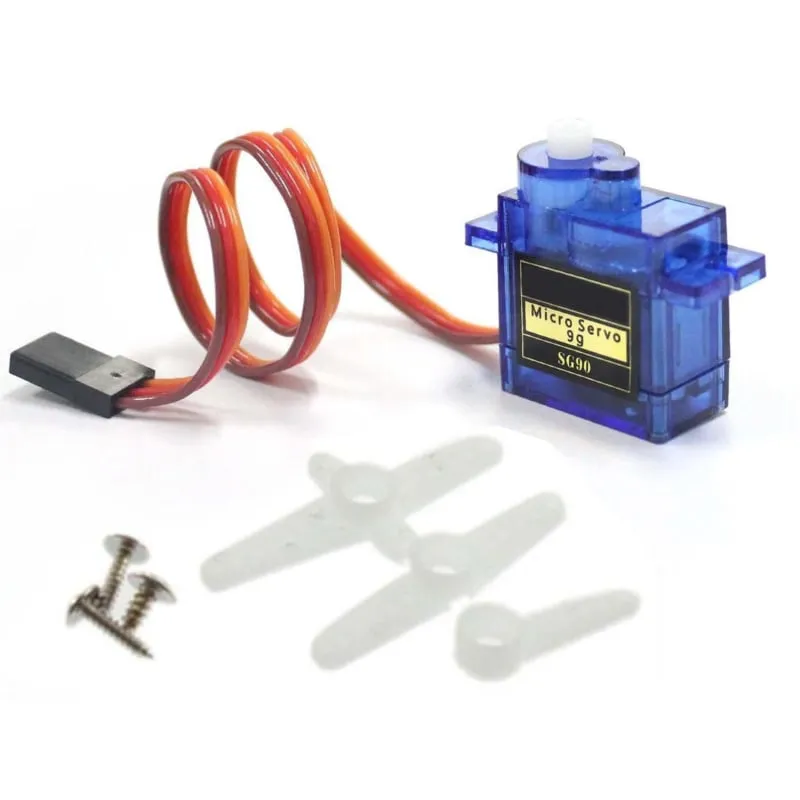
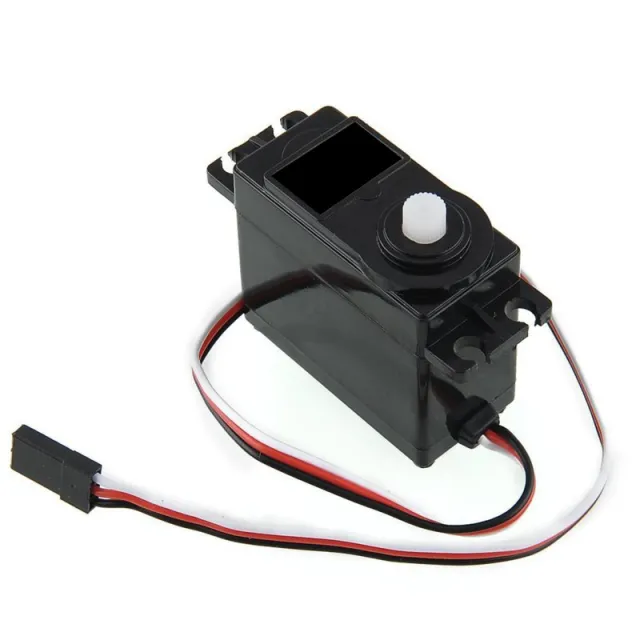
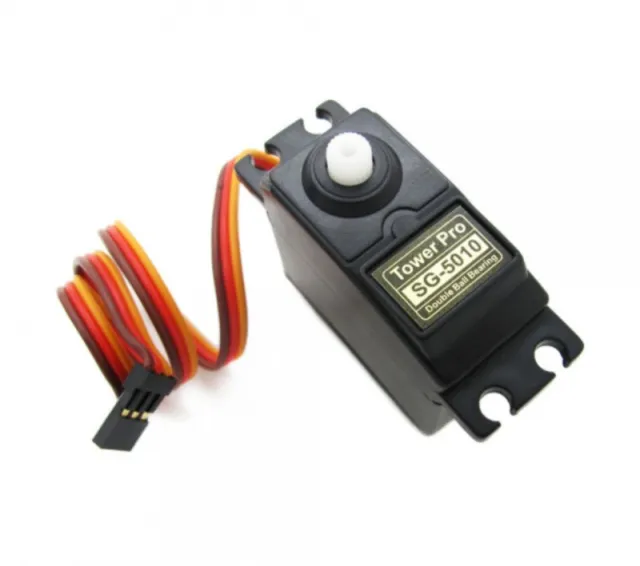
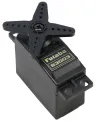
Le SG90 Micro Servo est un servo de haute qualité et de petite taille, parfait pour une utilisation dans des projets de loisirs et de petits robots. Avec un format compact de seulement 23 x 12,2 x 29 mm et un poids de seulement 9 grammes, ce servo est idéal pour une utilisation dans des espaces réduits où d'autres servos ne conviennent pas.
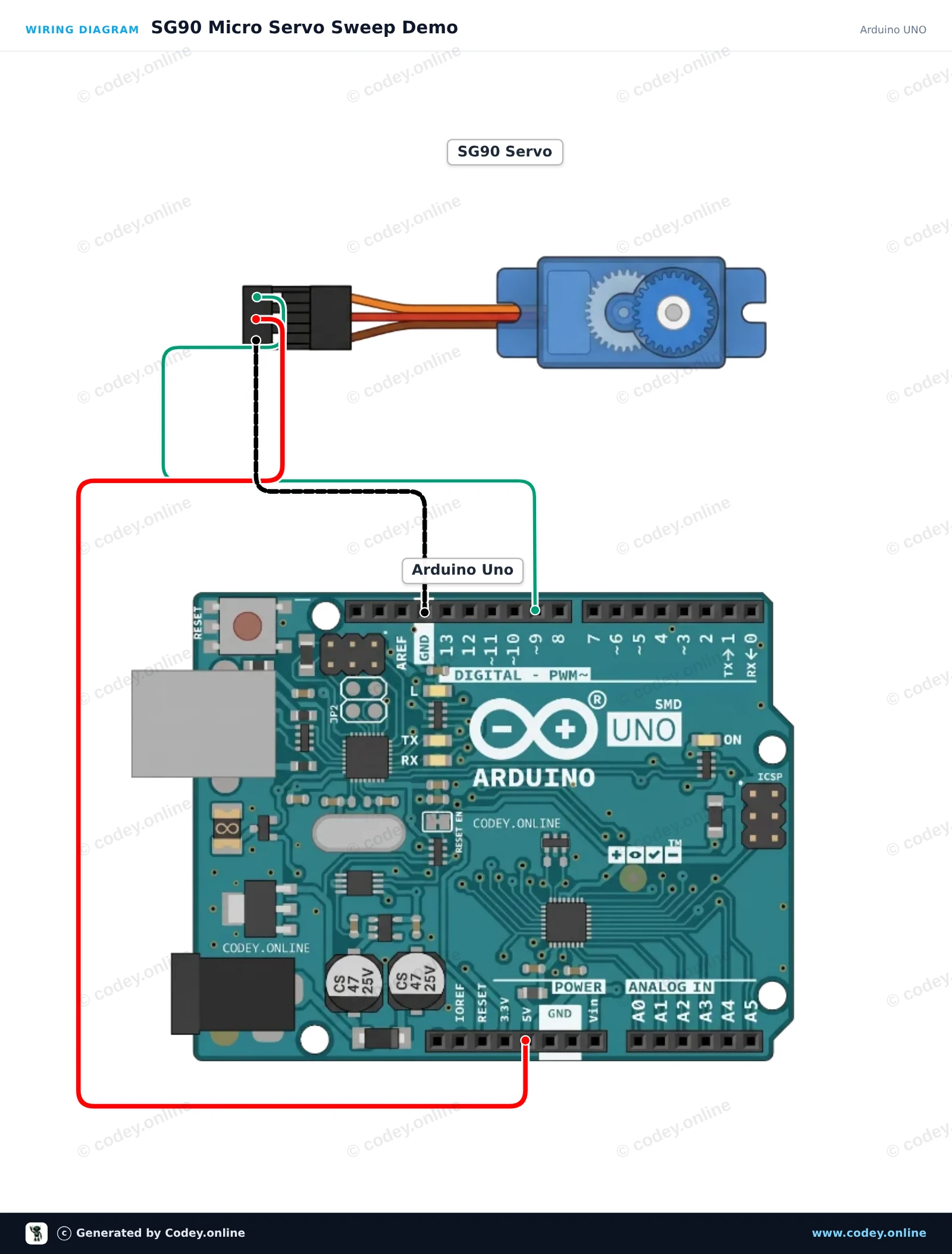
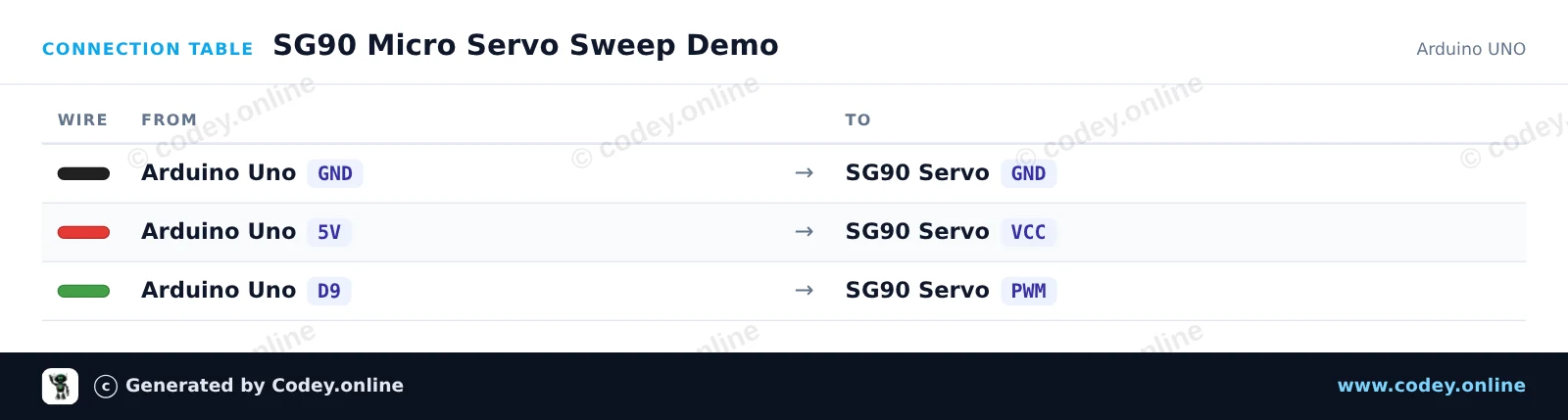
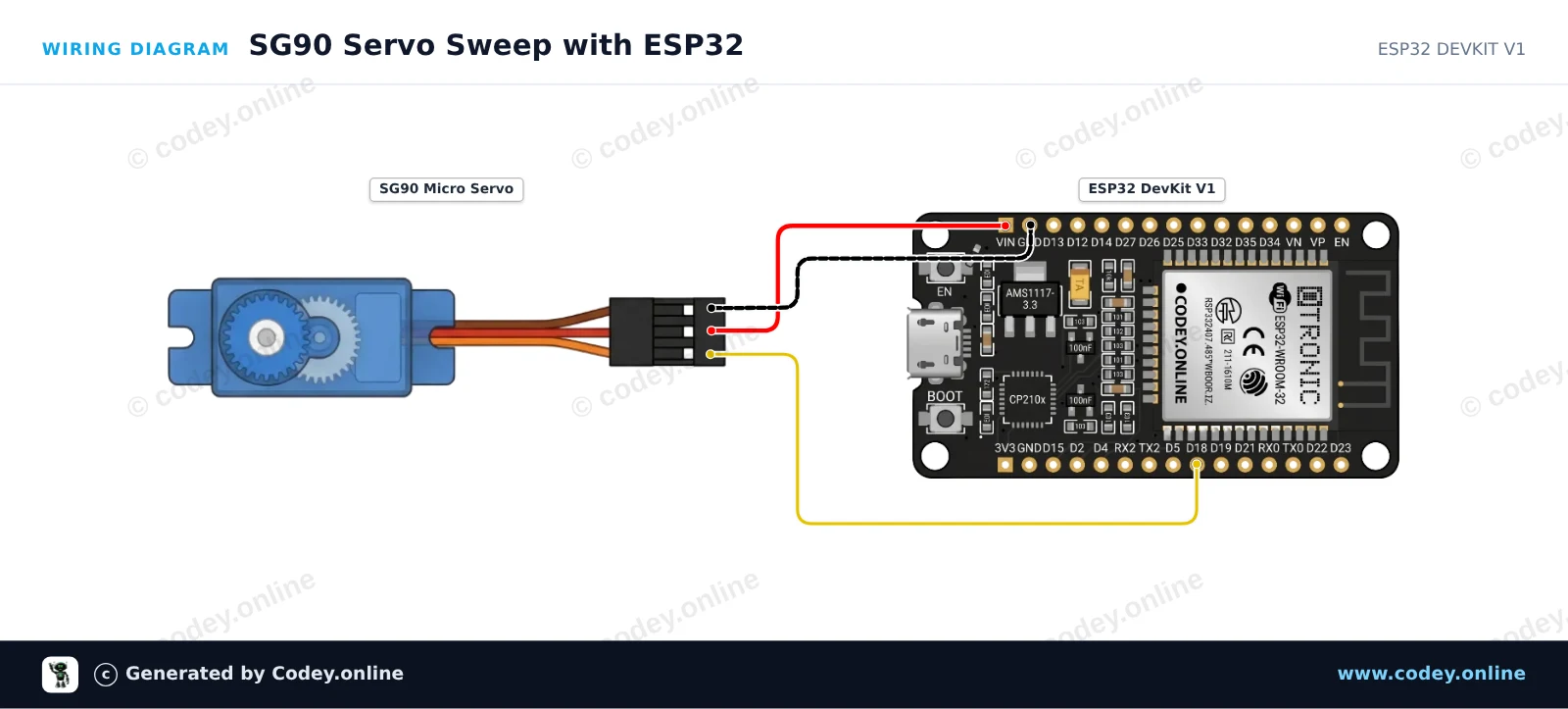
Consultez le schéma de câblage du SG90 et le code d'exemple pour Arduino.
Le SG90 Micro Servo a un couple de 1,5 kg/cm et peut être alimenté par une tension de 4,8 à 6 V. Il est également équipé d'un connecteur à 3 broches, ce qui facilite sa connexion à votre microcontrôleur ou carte de développement.
Ce servo a une plage de rotation de 180 degrés et peut être positionné avec précision à n'importe quel angle entre 0 et 180 degrés. Il dispose également d'un temps de réponse rapide de seulement 0,1 seconde, ce qui le rend idéal pour les applications où la vitesse est importante.
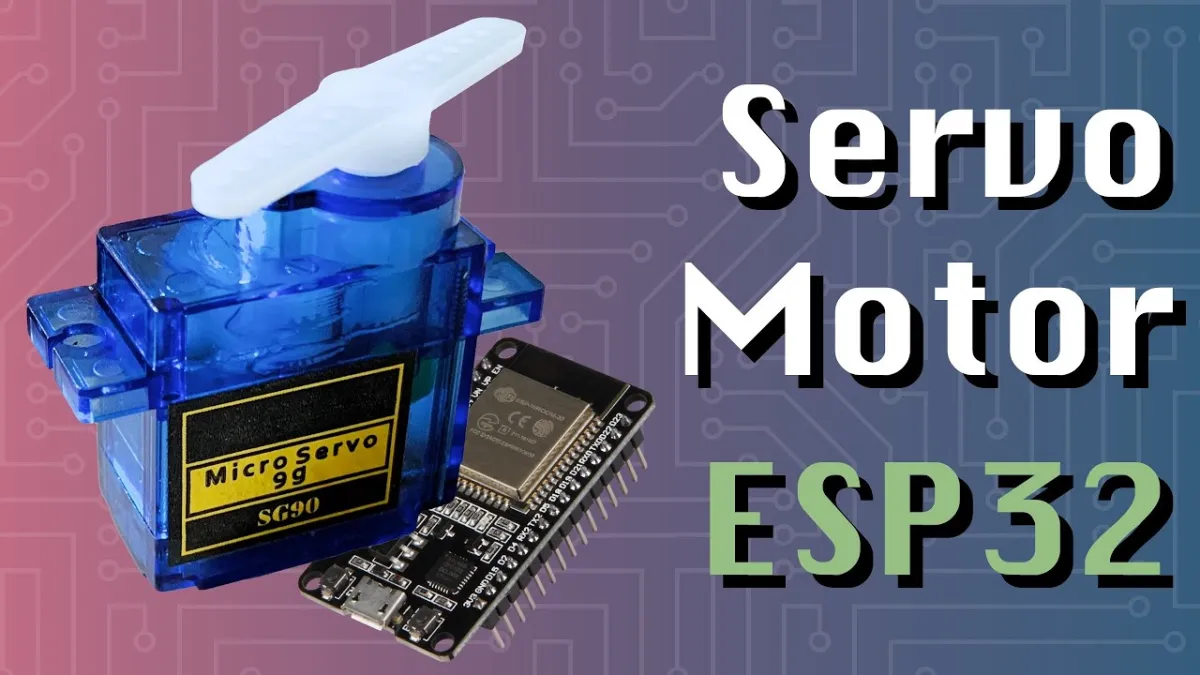
La lecture charge la vidéo depuis YouTube.
Voici comment connecter le Servo SG90 micro 180 degrés à un Arduino UNO ou à un ESP32, avec un exemple de sketch que tu peux téléverser directement.
Ce projet montre comment contrôler un micro servo SG90 avec un Arduino Uno. Le sketch fait balayer le bras du servo en douceur d'avant en arrière de 0 à 180 degrés. Ouvrez le Moniteur Série à 115200 baud pour observer l'angle actuel du servo.
/*
 * ==================================================================
 *  Generated by Codey.online  —  https://www.codey.online
 * ==================================================================
 *  Project   : SG90 Micro Servo Sweep Demo
 *  Board     : Arduino UNO (arduino:avr:uno)
 *  Parts     : Servo SG90
 *  Libraries : none (built-in)
 *
 *  Codey Online is an AI-powered browser IDE for Arduino and ESP32.
 *  Describe your project and Codey writes the code, draws the wiring
 *  diagram and uploads it to your board, straight from the browser.
 *  This code is free to use, modify and share, without warranty.
 * ==================================================================
 */

#include <Servo.h>

const int SERVO_PIN = 9;
Servo myServo;

void setup() {
  Serial.begin(115200);
  myServo.attach(SERVO_PIN);
  Serial.println(F("SG90 Servo Sweep Demo Started"));
}

void loop() {
  // Sweep from 0 to 180 degrees
  for (int pos = 0; pos <= 180; pos += 1) {
    myServo.write(pos);
    delay(15);
  }
  Serial.println(F("Reached 180 degrees"));
  delay(500);

  // Sweep back from 180 to 0 degrees
  for (int pos = 180; pos >= 0; pos -= 1) {
    myServo.write(pos);
    delay(15);
  }
  Serial.println(F("Reached 0 degrees"));
  delay(500);
}Wiring diagram and example code generated by Codey.online — https://www.codey.online
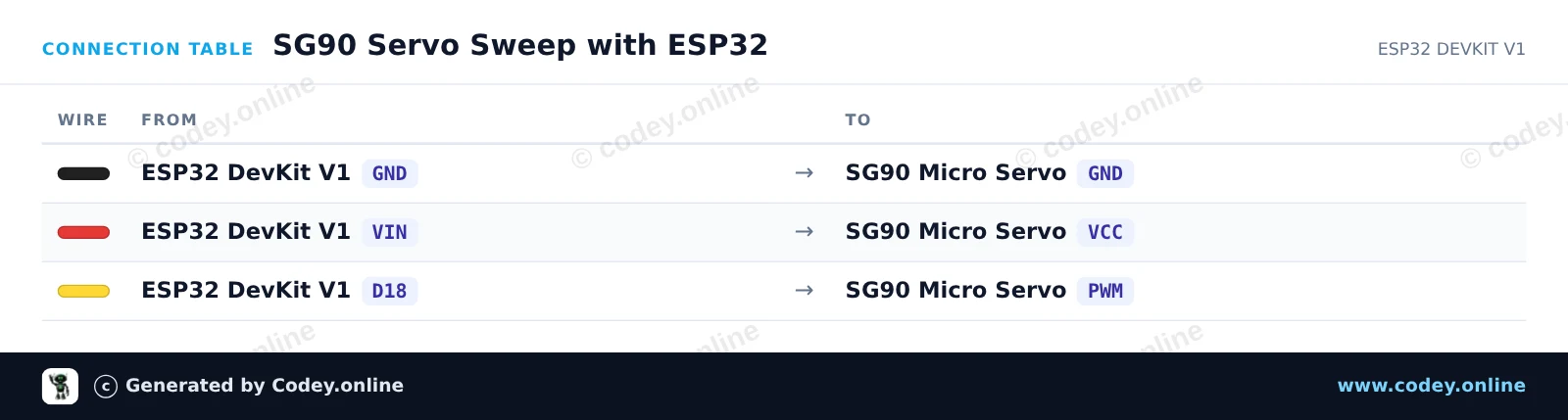
Ce projet fait balayer un micro servo SG90 d’avant en arrière sur 180 degrés. Le servo est alimenté depuis la broche VIN de l’ESP32 (5V via USB) et commandé à l’aide d’un signal PWM généré avec la bibliothèque ESP32Servo. Ouvrez le Moniteur série pour observer l’angle actuel pendant le balayage.
/*
 * ==================================================================
 *  Generated by Codey.online  —  https://www.codey.online
 * ==================================================================
 *  Project   : SG90 Servo Sweep with ESP32
 *  Board     : ESP32 DEVKIT V1 (esp32:esp32:esp32doit-devkit-v1)
 *  Parts     : Servo SG90
 *  Libraries : ESP32Servo 3.1.3
 *
 *  Codey Online is an AI-powered browser IDE for Arduino and ESP32.
 *  Describe your project and Codey writes the code, draws the wiring
 *  diagram and uploads it to your board, straight from the browser.
 *  This code is free to use, modify and share, without warranty.
 * ==================================================================
 */

#include <ESP32Servo.h>

const int SERVO_PIN = 18;  // GPIO 18 connected to servo PWM pin

Servo myServo;

void setup() {
  Serial.begin(115200);
  Serial.println("ESP32 SG90 Servo Sweep Demo");

  // Allow allocation of all timers for ESP32Servo
  ESP32PWM::allocateTimer(0);
  ESP32PWM::allocateTimer(1);
  ESP32PWM::allocateTimer(2);
  ESP32PWM::allocateTimer(3);
  myServo.setPeriodHertz(50);      // Standard 50 Hz servo
  myServo.attach(SERVO_PIN, 500, 2400); // Standard pulse width limits for SG90
}

void loop() {
  // Sweep from 0 to 180 degrees
  for (int pos = 0; pos <= 180; pos += 5) {
    myServo.write(pos);
    Serial.print("Position: ");
    Serial.println(pos);
    delay(20);
  }

  delay(500);

  // Sweep back from 180 to 0 degrees
  for (int pos = 180; pos >= 0; pos -= 5) {
    myServo.write(pos);
    Serial.print("Position: ");
    Serial.println(pos);
    delay(20);
  }

  delay(500);
}Bibliothèques nécessaires : ESP32Servo 3.1.3
Wiring diagram and example code generated by Codey.online — https://www.codey.online





 English
 Nederlands
 Deutsch
 Italiano
 Español
 Suomi
 Polski
 Dansk
 Ελληνικά
 Български
 Čeština
 Hrvatski
 Svenska
 Aileen