SKU: OT6767 Numéro d’article: AH131 EAN: 8720828223857

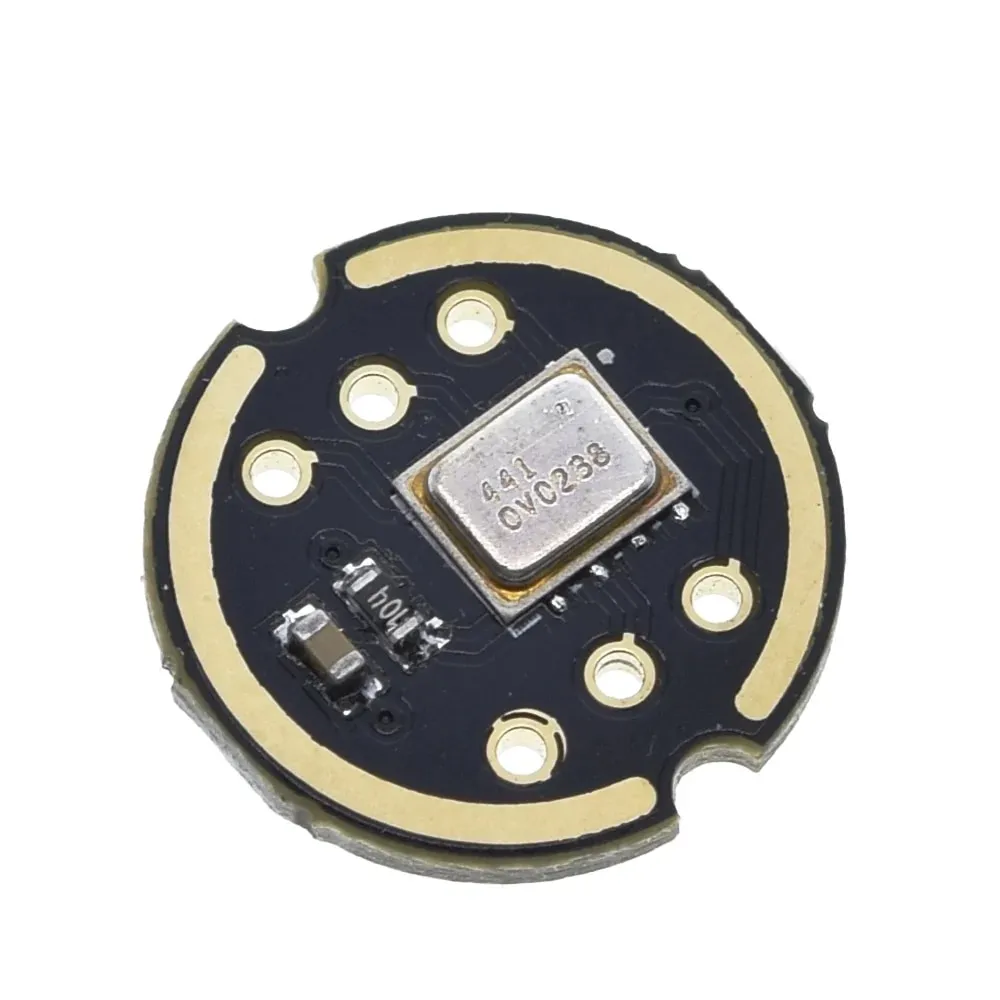
Enrichissez vos projets technologiques avec notre module de microphone MEMS omnidirectionnel avancé, équipé de la puce INMP441. Ce module est conçu pour offrir des performances audio de haute qualité, compatible avec une large gamme de microcontrôleurs et de cartes de développement fonctionnant en 3,3 V, tels que l’ESP8266, l’ESP32 et même le Raspberry Pi. Cela en fait un choix polyvalent pour des applications allant des appareils intelligents et de l’analyse sonore aux projets artistiques interactifs.
Spécifications techniques :
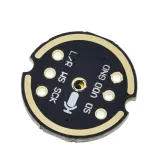
Brochage :
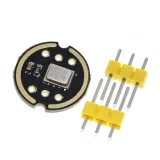
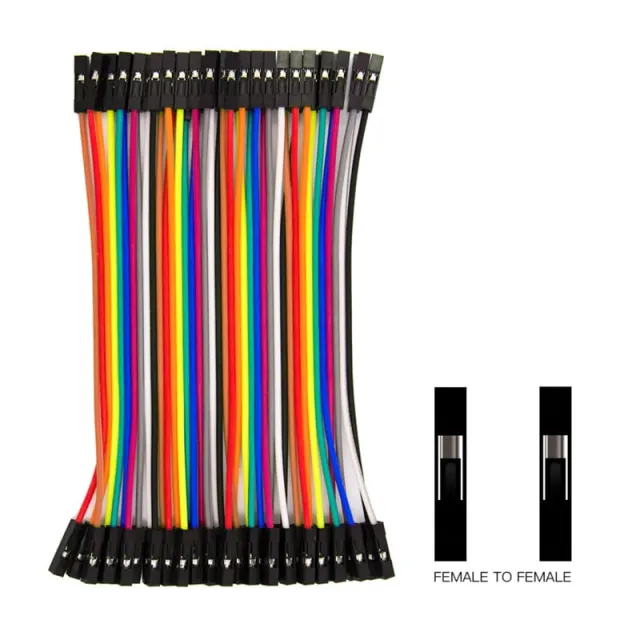
Contenu du paquet :
Ce module microphone convient non seulement aux hobbyistes et aux makers, mais aussi aux professionnels à la recherche d’une solution fiable pour des projets audio avancés. Il prend en charge un large éventail d’applications et est compatible avec des plateformes de développement populaires telles que l’ESP8266, l’ESP32 et le Raspberry Pi, ce qui en fait un excellent choix pour tous ceux qui souhaitent enrichir leurs projets avec un son de haute qualité.
Ce module de microphone MEMS omnidirectionnel avec la puce INMP441 convient à un large éventail d’applications, notamment :
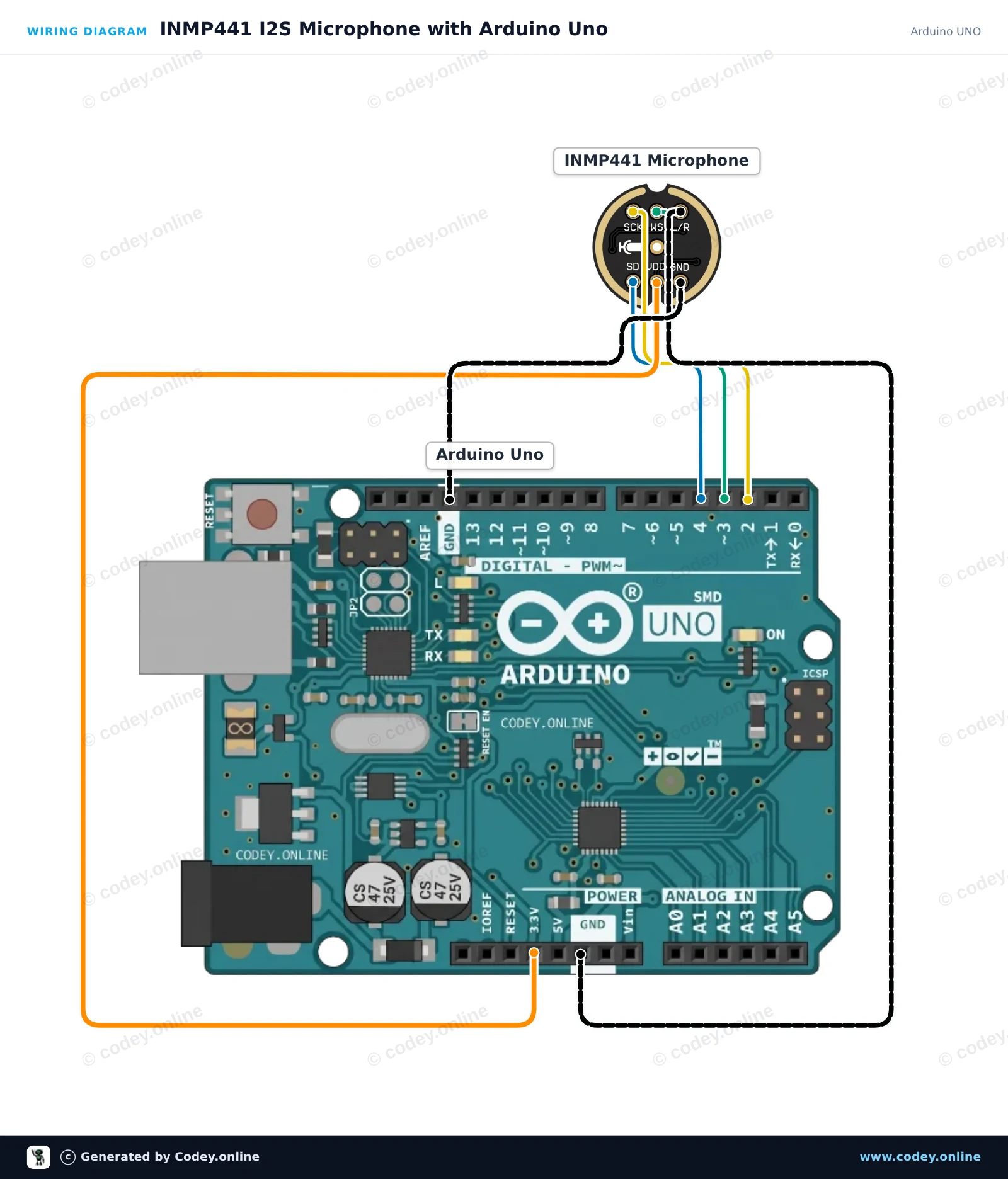
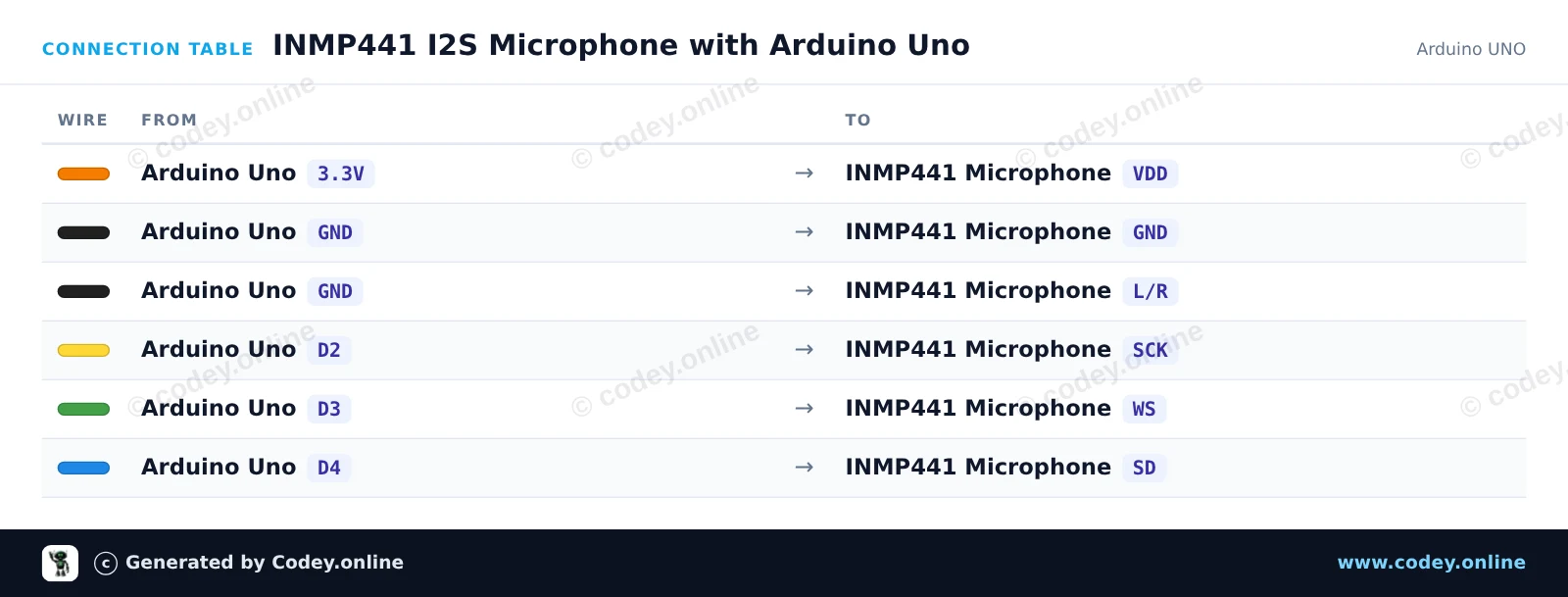
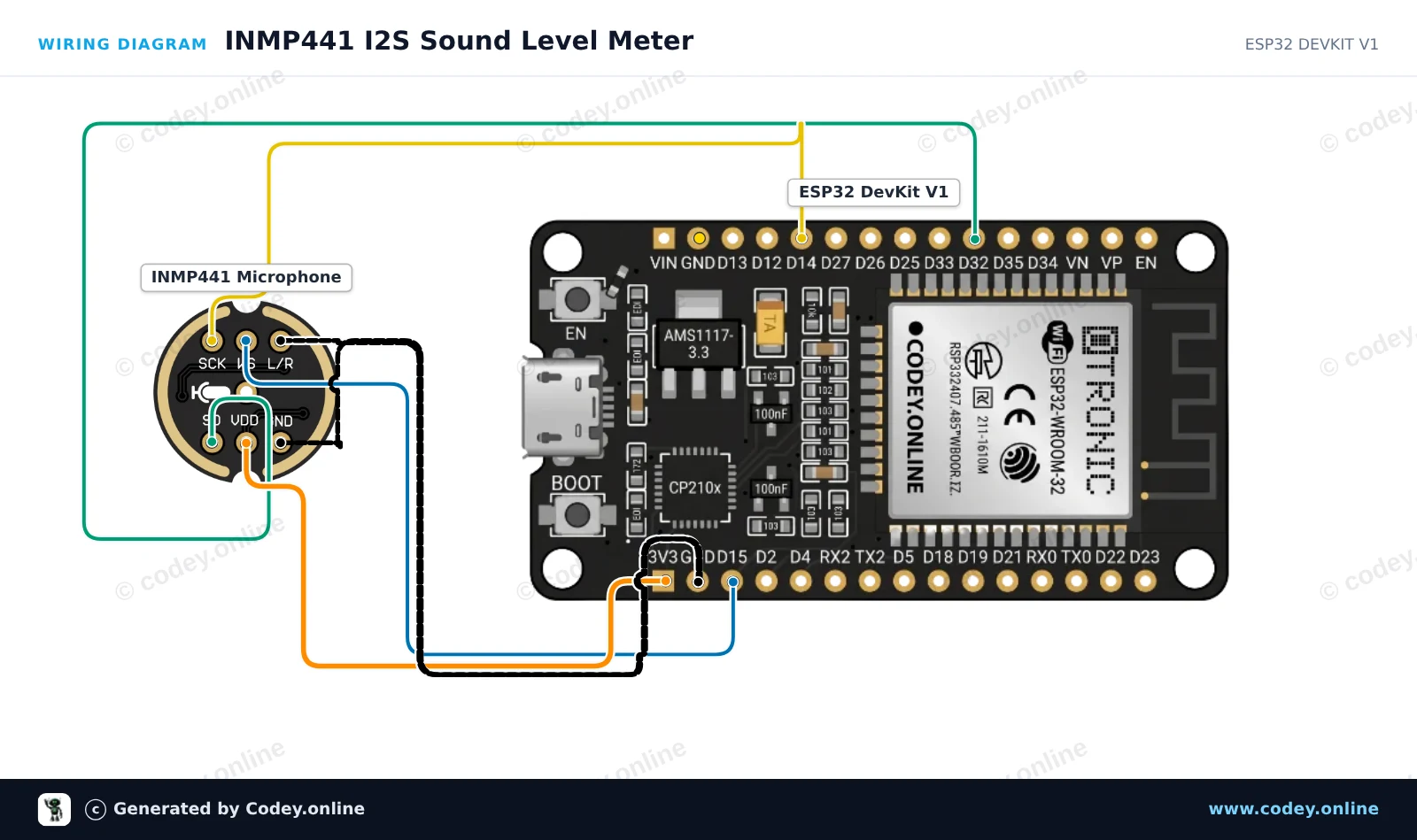
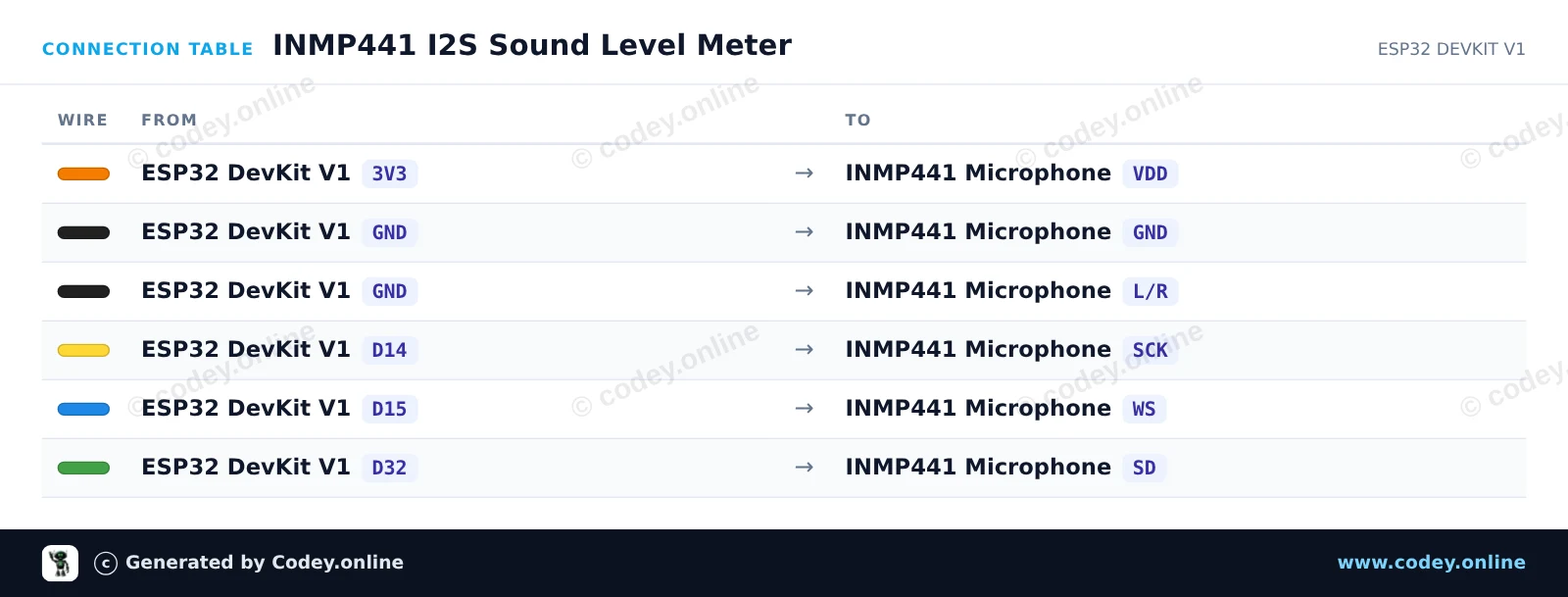
Voici comment connecter le Microphone omnidirectionnel INMP441 MEMS 3,3 V à un Arduino UNO ou à un ESP32, avec un exemple de sketch que tu peux téléverser directement.
Ce projet connecte un microphone omnidirectionnel numérique I2S INMP441 à un Arduino Uno. L'Uno génère en logiciel les signaux I2S de bit clock (SCK) et de word select (WS) pour lire des échantillons audio 24-bit depuis la ligne SD. Ouvrez le Moniteur série ou le Traceur série à 115200 baud pour voir les niveaux sonores fluctuer en temps réel.
/*
 * ==================================================================
 *  Generated by Codey.online  —  https://www.codey.online
 * ==================================================================
 *  Project   : INMP441 I2S Microphone with Arduino Uno
 *  Board     : Arduino UNO (arduino:avr:uno)
 *  Parts     : INMP441 microphone
 *  Libraries : none (built-in)
 *
 *  Codey Online is an AI-powered browser IDE for Arduino and ESP32.
 *  Describe your project and Codey writes the code, draws the wiring
 *  diagram and uploads it to your board, straight from the browser.
 *  This code is free to use, modify and share, without warranty.
 * ==================================================================
 */

// INMP441 I2S Microphone demonstration on Arduino Uno

const int PIN_SCK = 2; // Serial Clock (SCK)
const int PIN_WS  = 3; // Word Select / LRCLK (WS)
const int PIN_SD  = 4; // Serial Data (SD)

void setup() {
  Serial.begin(115200);

  pinMode(PIN_SCK, OUTPUT);
  pinMode(PIN_WS, OUTPUT);
  pinMode(PIN_SD, INPUT);

  digitalWrite(PIN_SCK, LOW);
  digitalWrite(PIN_WS, LOW);

  Serial.println(F("INMP441 Microphone Demo Initialized."));
  Serial.println(F("Speak or make noise near the microphone."));
}

// Bit-bang 32 clock pulses per channel and sample 24-bit audio
int32_t readI2SSample() {
  int32_t sample = 0;

  // Select Left Channel
  digitalWrite(PIN_WS, LOW);

  // I2S standard has 1-bit delay before MSB
  for (int bit = 0; bit < 32; bit++) {
    digitalWrite(PIN_SCK, HIGH);
    digitalWrite(PIN_SCK, LOW);

    if (bit > 0 && bit <= 24) {
      sample = (sample << 1) | digitalRead(PIN_SD);
    }
  }

  // Select Right Channel to complete stereo frame
  digitalWrite(PIN_WS, HIGH);
  for (int bit = 0; bit < 32; bit++) {
    digitalWrite(PIN_SCK, HIGH);
    digitalWrite(PIN_SCK, LOW);
  }

  // Sign-extend 24-bit to 32-bit signed integer
  if (sample & 0x00800000) {
    sample |= 0xFF000000;
  }

  return sample;
}

void loop() {
  int32_t rawSample = readI2SSample();
  int32_t magnitude = abs(rawSample);

  Serial.print(F("Raw: "));
  Serial.print(rawSample);
  Serial.print(F("\tMagnitude: "));
  Serial.println(magnitude);

  delay(20);
}Wiring diagram and example code generated by Codey.online — https://www.codey.online
Lit l’audio numérique du microphone I2S omnidirectionnel INMP441 et calcule les niveaux de volume en temps réel. Ouvrez le Serial Monitor ou le Serial Plotter à 115200 baud pour visualiser le bruit ambiant et l’amplitude de la voix.
/*
 * ==================================================================
 *  Generated by Codey.online  —  https://www.codey.online
 * ==================================================================
 *  Project   : INMP441 I2S Sound Level Meter
 *  Board     : ESP32 DEVKIT V1 (esp32:esp32:esp32doit-devkit-v1)
 *  Parts     : INMP441 microphone
 *  Libraries : none (built-in)
 *
 *  Codey Online is an AI-powered browser IDE for Arduino and ESP32.
 *  Describe your project and Codey writes the code, draws the wiring
 *  diagram and uploads it to your board, straight from the browser.
 *  This code is free to use, modify and share, without warranty.
 * ==================================================================
 */

#include <driver/i2s.h>

#define I2S_WS   15
#define I2S_SD   32
#define I2S_SCK  14
#define I2S_PORT I2S_NUM_0
#define BUFFER_LEN 64

int32_t samples[BUFFER_LEN];

void setup() {
  Serial.begin(115200);

  const i2s_config_t i2s_config = {
    .mode = (i2s_mode_t)(I2S_MODE_MASTER | I2S_MODE_RX),
    .sample_rate = 16000,
    .bits_per_sample = I2S_BITS_PER_SAMPLE_32BIT,
    .channel_format = I2S_CHANNEL_FMT_ONLY_LEFT,
    .communication_format = i2s_comm_format_t(I2S_COMM_FORMAT_STAND_I2S),
    .intr_alloc_flags = ESP_INTR_FLAG_LEVEL1,
    .dma_buf_count = 4,
    .dma_buf_len = BUFFER_LEN,
    .use_apll = false
  };

  const i2s_pin_config_t pin_config = {
    .bck_io_num = I2S_SCK,
    .ws_io_num = I2S_WS,
    .data_out_num = I2S_PIN_NO_CHANGE,
    .data_in_num = I2S_SD
  };

  i2s_driver_install(I2S_PORT, &i2s_config, 0, NULL);
  i2s_set_pin(I2S_PORT, &pin_config);
}

void loop() {
  size_t bytes_read = 0;
  i2s_read(I2S_PORT, &samples, sizeof(samples), &bytes_read, portMAX_DELAY);

  int samples_read = bytes_read / sizeof(int32_t);
  int64_t sum = 0;

  for (int i = 0; i < samples_read; i++) {
    int32_t sample = samples[i] >> 14;
    sum += abs(sample);
  }

  if (samples_read > 0) {
    int32_t sound_level = sum / samples_read;
    Serial.print("SoundLevel:");
    Serial.println(sound_level);
  }

  delay(20);
}Wiring diagram and example code generated by Codey.online — https://www.codey.online





 English
  Nederlands
  Deutsch
  Italiano
  Español
  Suomi
Suomi  Polski
  Dansk
Dansk  Ελληνικά
  Български
  Čeština
  Hrvatski
  Aileen