SKU: OT407-C47 Numéro d’article: XE329 EAN: 5447045128170

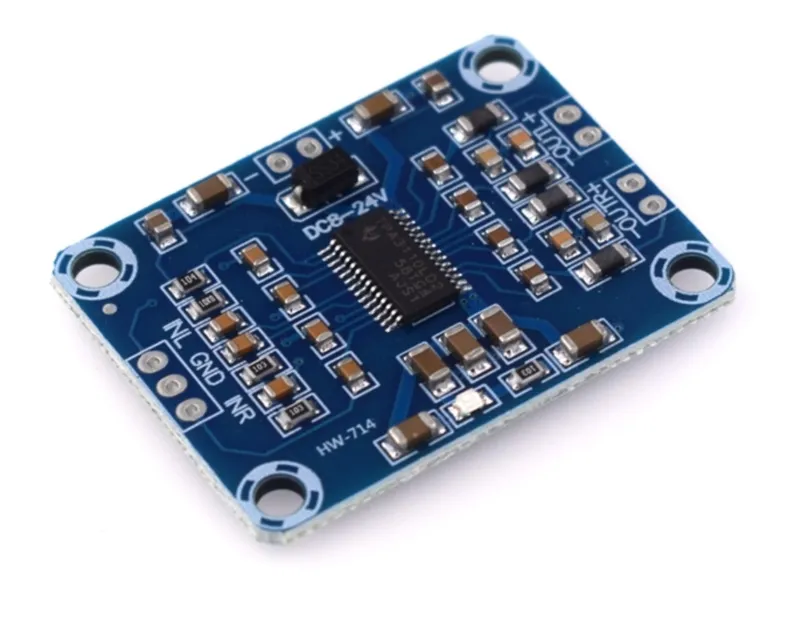
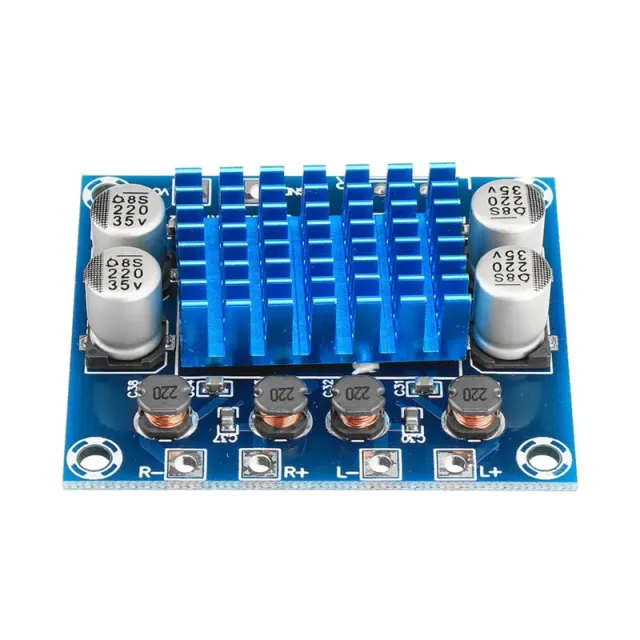
Petit amplificateur numérique avec une puissance maximale de 2x15 Watts.
Impédance : 8 Ohm
Puissance : 2 x 15 Watts
Canaux : 2 / Stéréo
Entrée : Gauche | Min | Droite
Tension de fonctionnement : 8V-24V DC
Dimensions
Longueur : 4,1cm
Largeur : 3,1cm
Hauteur : 0,3cm
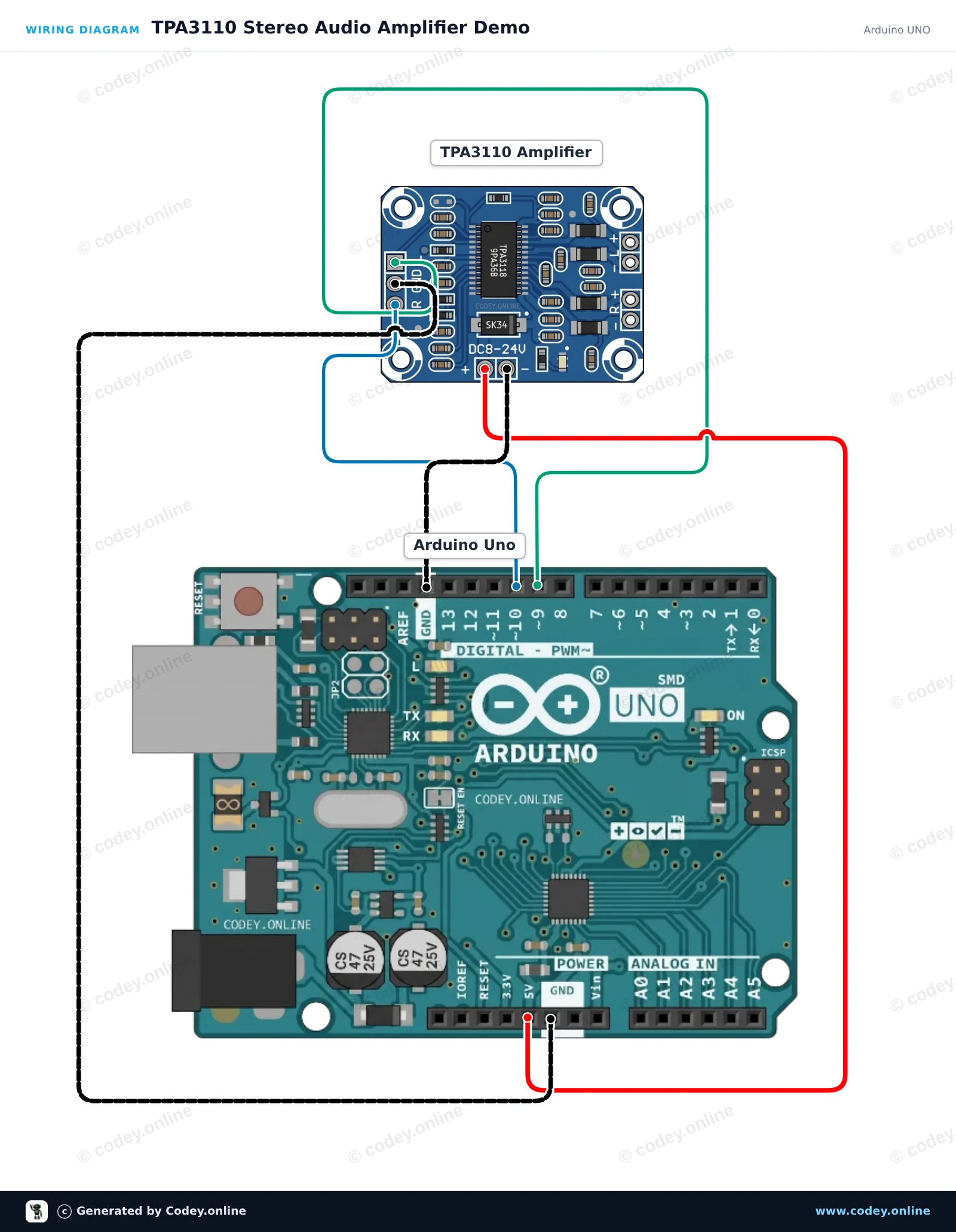
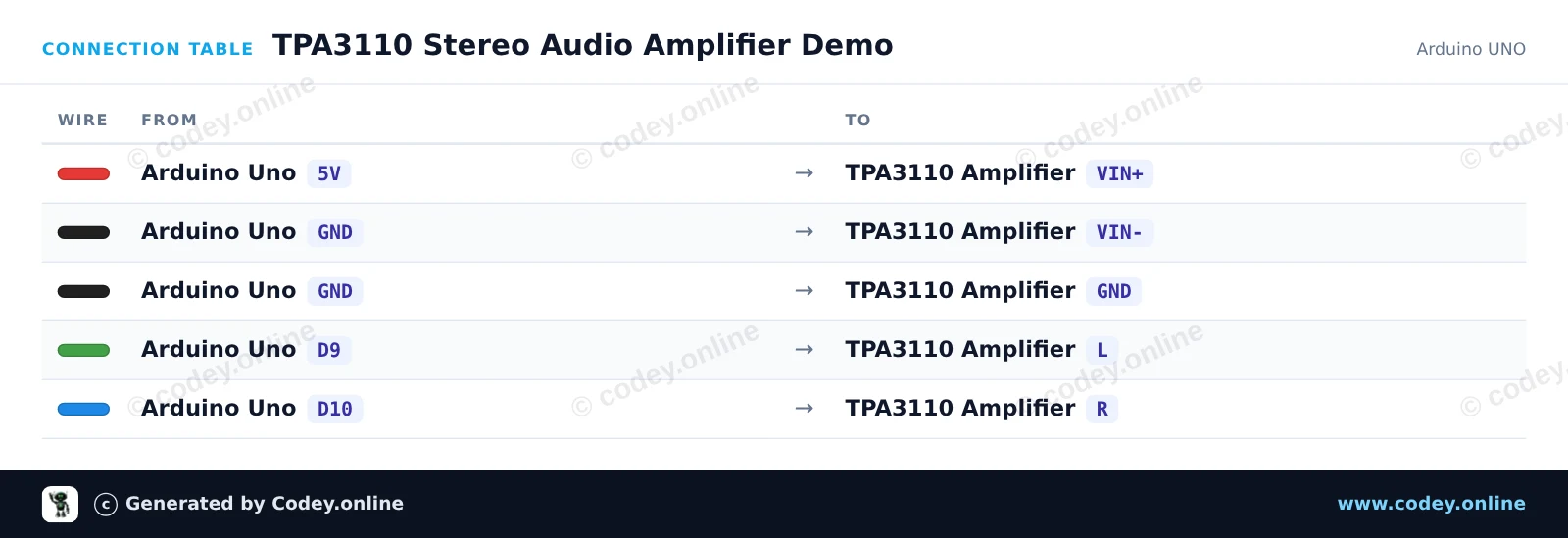
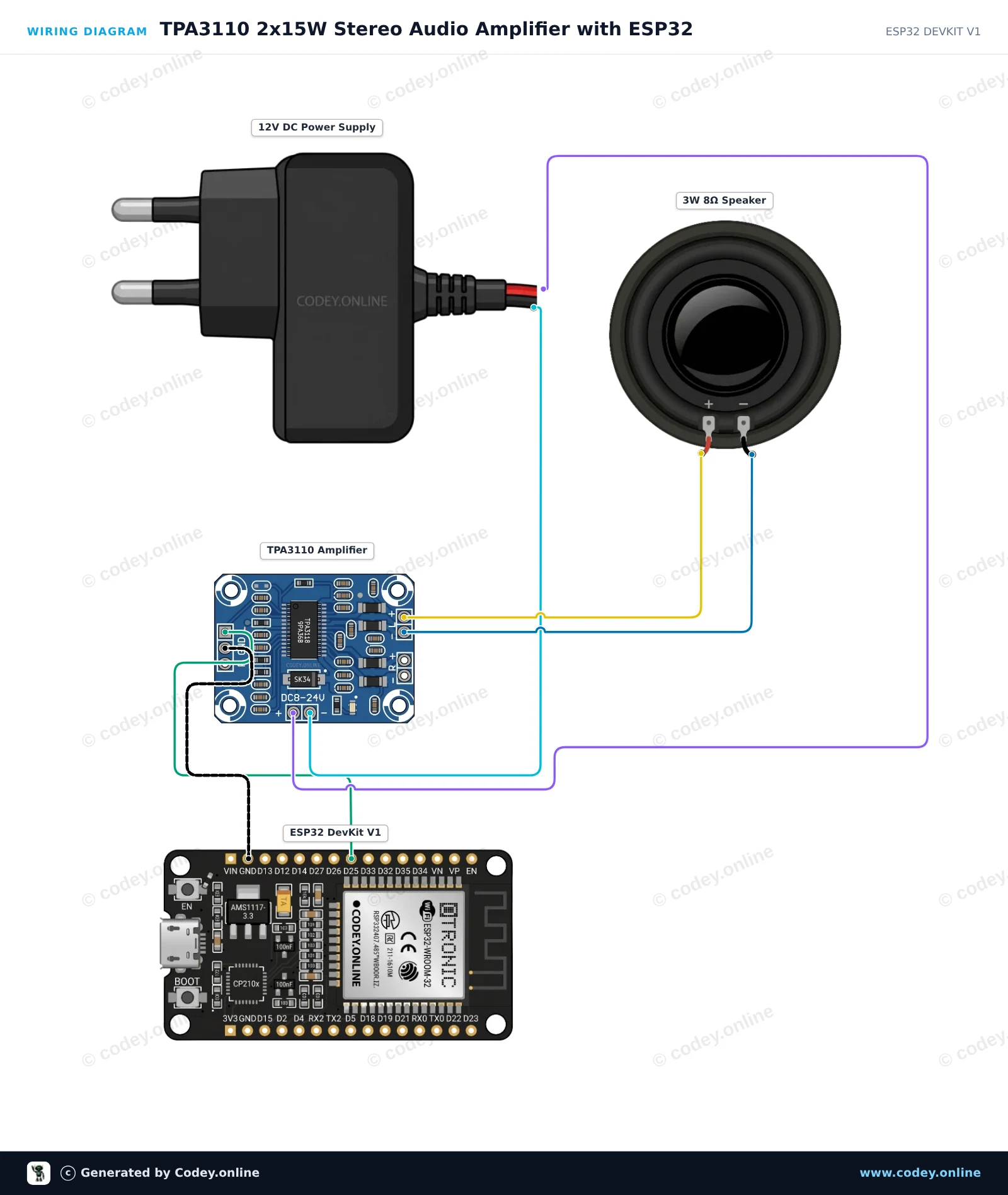
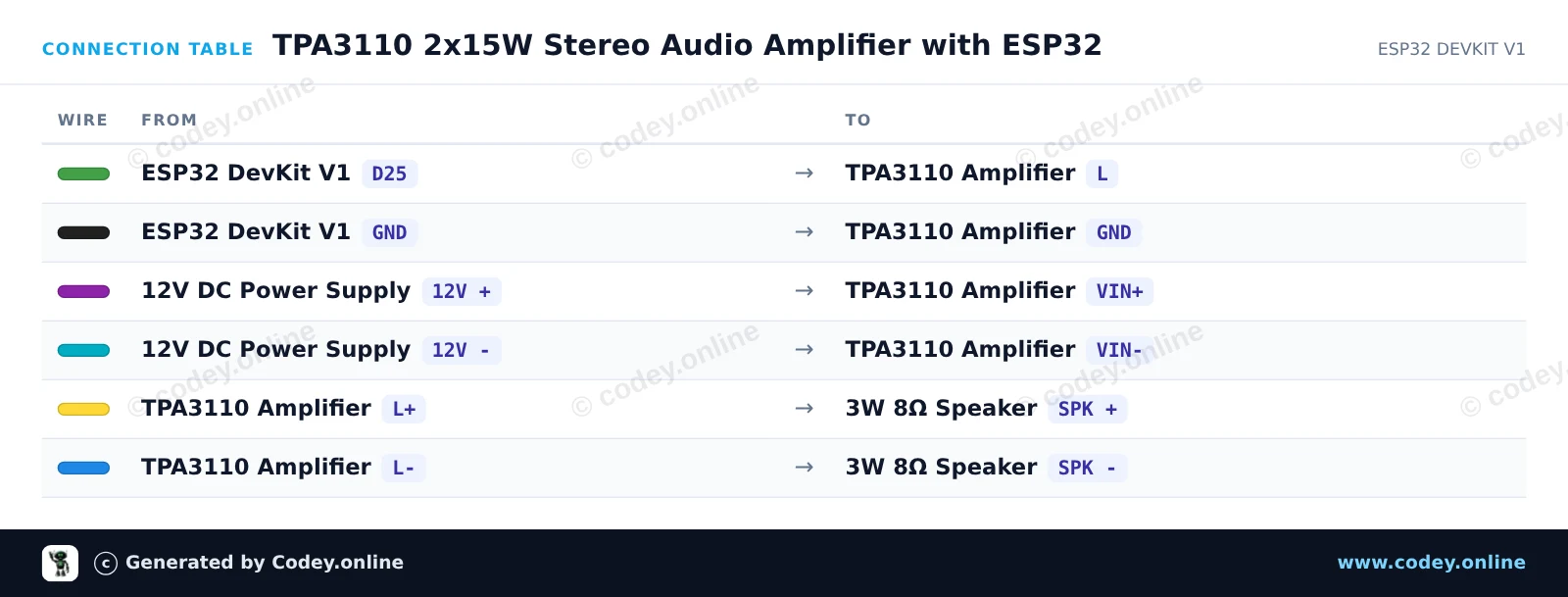
Voici comment connecter le Module d'amplificateur audio numérique mini 2x15W 8-24V | TPA3110 | HW-714 à un Arduino UNO ou à un ESP32, avec un exemple de sketch que tu peux téléverser directement.
Ce projet montre le module amplificateur stéréo TPA3110 en jouant des tonalités de test alternées sur les canaux audio gauche et droit. Connectez des haut-parleurs aux sorties à bornes de l'amplificateur pour entendre les tonalités alterner entre les canaux stéréo.
/*
 * ==================================================================
 *  Generated by Codey.online  —  https://www.codey.online
 * ==================================================================
 *  Project   : TPA3110 Stereo Audio Amplifier Demo
 *  Board     : Arduino UNO (arduino:avr:uno)
 *  Parts     : TPA3110 2x15W Amplifier
 *  Libraries : none (built-in)
 *
 *  Codey Online is an AI-powered browser IDE for Arduino and ESP32.
 *  Describe your project and Codey writes the code, draws the wiring
 *  diagram and uploads it to your board, straight from the browser.
 *  This code is free to use, modify and share, without warranty.
 * ==================================================================
 */

// Stereo test tone generator for TPA3110 Amplifier
const int LEFT_PIN = 9;
const int RIGHT_PIN = 10;

void setup() {
  Serial.begin(115200);
  Serial.println(F("TPA3110 Amplifier Test Ready"));
}

void loop() {
  // Play tone on Left Channel (440 Hz - A4)
  Serial.println(F("Playing Left Channel (440 Hz)"));
  tone(LEFT_PIN, 440, 500);
  delay(700);

  // Play tone on Right Channel (880 Hz - A5)
  Serial.println(F("Playing Right Channel (880 Hz)"));
  tone(RIGHT_PIN, 880, 500);
  delay(700);
}Wiring diagram and example code generated by Codey.online — https://www.codey.online
Ce projet utilise le DAC intégré de l'ESP32 pour générer des tonalités musicales et envoie le signal audio de niveau line-level vers l'amplificateur stéréo TPA3110. Le TPA3110 est alimenté par une alimentation externe 12V DC afin d’alimenter proprement un haut-parleur de 3W à volume élevé. Une fois sous tension, l'ESP32 synthétise un arpège musical à 4 notes toutes les quelques secondes.
/*
 * ==================================================================
 *  Generated by Codey.online  —  https://www.codey.online
 * ==================================================================
 *  Project   : TPA3110 2x15W Stereo Audio Amplifier with ESP32
 *  Board     : ESP32 DEVKIT V1 (esp32:esp32:esp32doit-devkit-v1)
 *  Parts     : TPA3110 2x15W Amplifier
 *  Libraries : none (built-in)
 *
 *  Codey Online is an AI-powered browser IDE for Arduino and ESP32.
 *  Describe your project and Codey writes the code, draws the wiring
 *  diagram and uploads it to your board, straight from the browser.
 *  This code is free to use, modify and share, without warranty.
 * ==================================================================
 */

// ESP32 DAC Sine Wave Audio Player for TPA3110 Amplifier
#include <Arduino.h>
#include <math.h>

const int AUDIO_DAC_PIN = 25; // ESP32 built-in 8-bit DAC1 (GPIO 25)

void playTone(float freqHz, int durationMs) {
  unsigned long start = millis();
  float phase = 0.0;
  float phaseInc = 2.0 * PI * freqHz / 20000.0; // ~20 kHz sample rate approximation

  while (millis() - start < (unsigned long)durationMs) {
    // Generate centered sine wave for the line-in input
    uint8_t sample = (uint8_t)(128 + 100.0 * sin(phase));
    dacWrite(AUDIO_DAC_PIN, sample);
    phase += phaseInc;
    if (phase >= 2.0 * PI) {
      phase -= 2.0 * PI;
    }
    delayMicroseconds(50); // ~20 kHz sample interval
  }
  dacWrite(AUDIO_DAC_PIN, 128); // Return to neutral line level
}

void setup() {
  Serial.begin(115200);
  Serial.println("TPA3110 Amplifier Demo Initialized");
  dacWrite(AUDIO_DAC_PIN, 128);
}

void loop() {
  Serial.println("Playing arpeggio sequence...");

  playTone(261.63, 250); // C4
  delay(50);
  playTone(329.63, 250); // E4
  delay(50);
  playTone(392.00, 250); // G4
  delay(50);
  playTone(523.25, 400); // C5

  delay(2000);
}Wiring diagram and example code generated by Codey.online — https://www.codey.online






 English
  Nederlands
  Deutsch
  Italiano
  Español
  Suomi
Suomi  Polski
  Dansk
Dansk  Ελληνικά
  Български
  Čeština
  Hrvatski
  Aileen