SKU: OT704-C87 Numéro d’article: AB039 EAN: 8029313760373

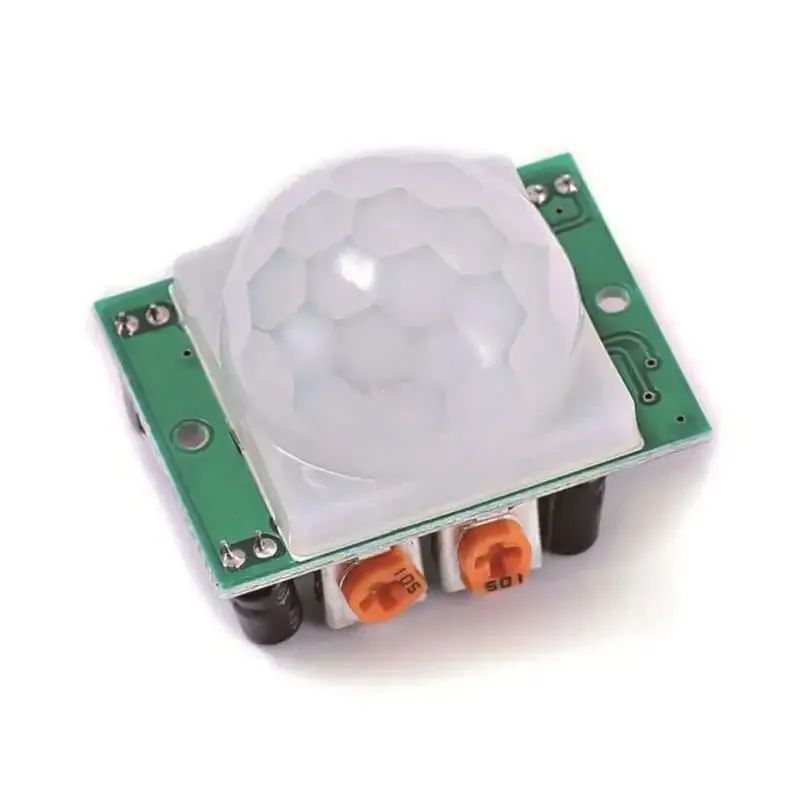
Le capteur de mouvement PIR HC-SR501 est un capteur de mouvement infrarouge avec les spécifications suivantes :
– Distance de détection : 3-7 m.
– Temporisation : 5-200 s
– Tension de sortie : 3.3V
- Fonctionne avec : 4.5-20V
– Angle de détection : <140°.
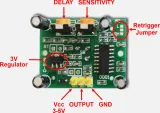
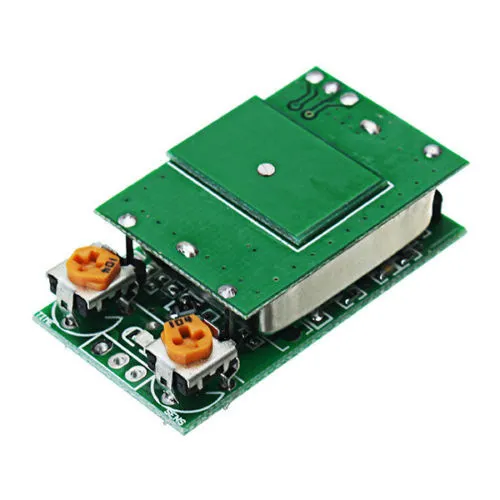
Le capteur de mouvement PIR HC-SR501 détecte les mouvements infrarouges PIR. Lorsqu’un mouvement est détecté, il fournit un signal de 3.3V sur la broche de sortie ; la durée est réglable via le potentiomètre VR1. La distance de détection est réglable de 3 à 7 mètres via le potentiomètre VR2.
La lecture charge la vidéo depuis YouTube.
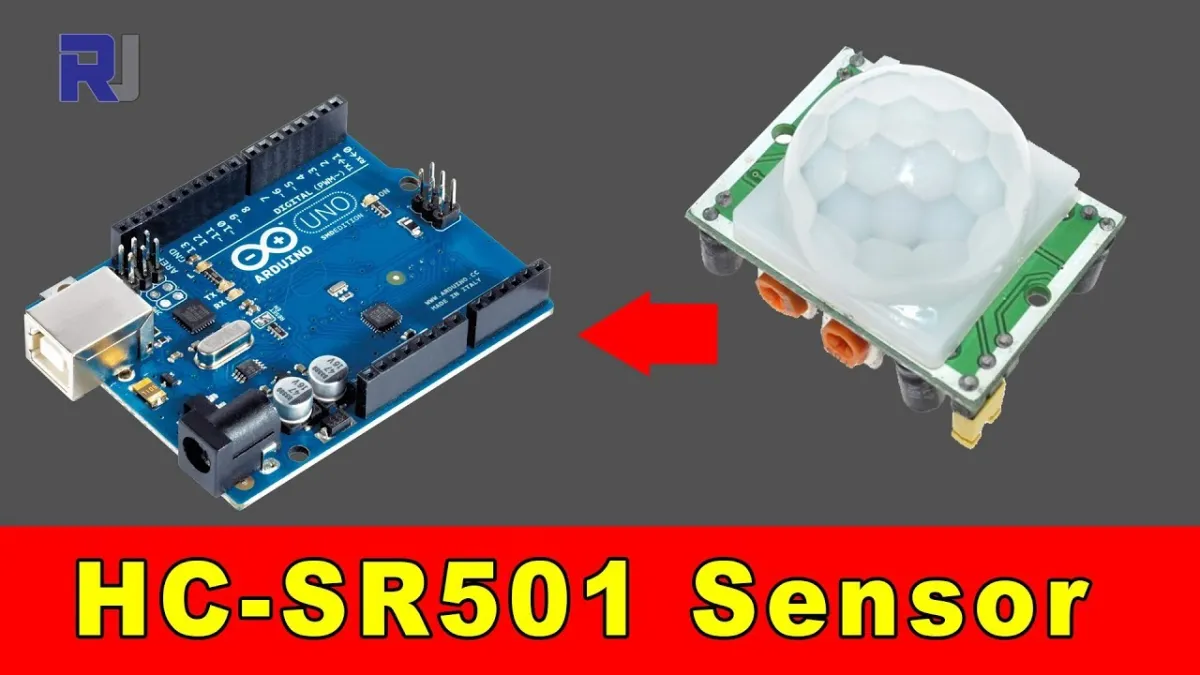
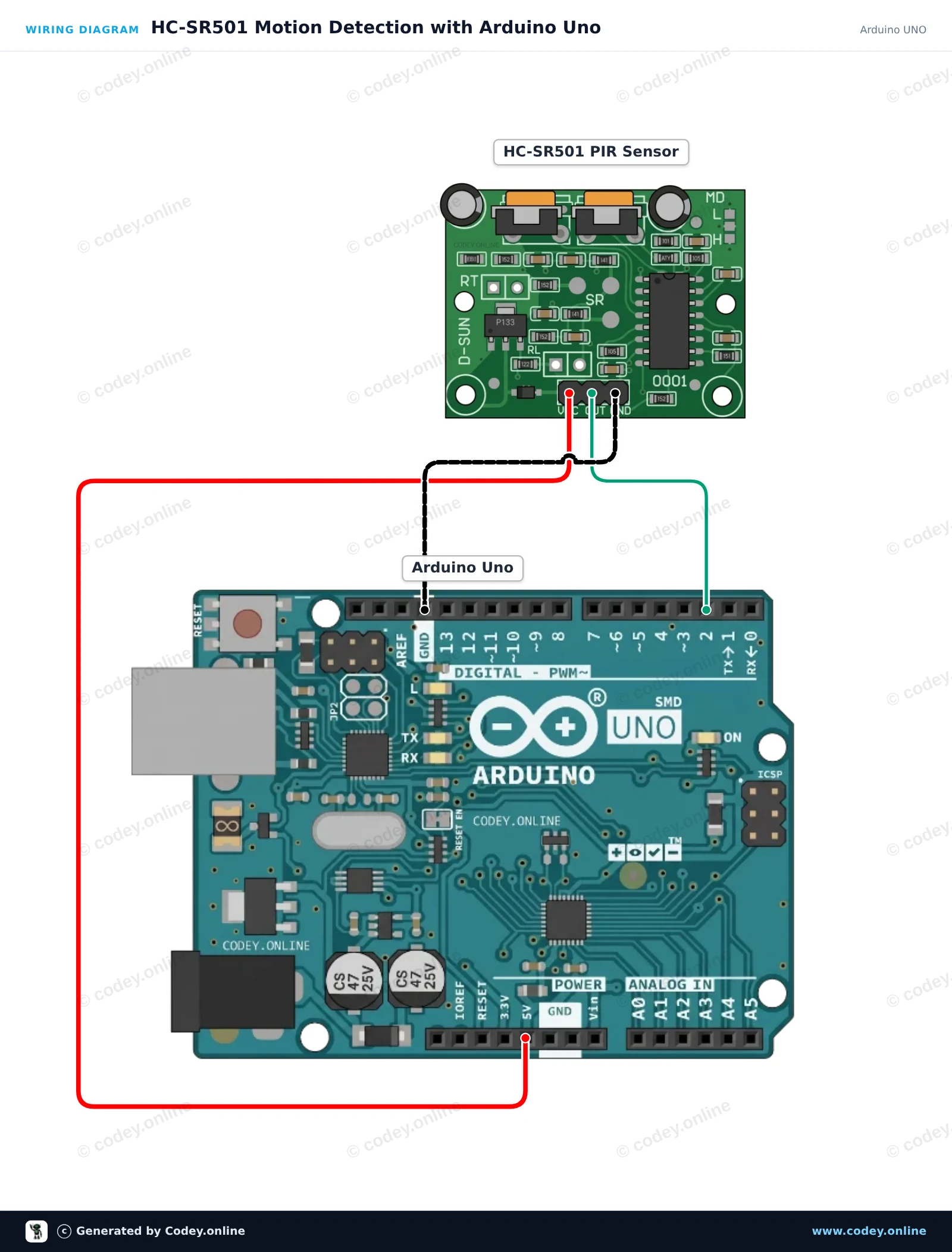
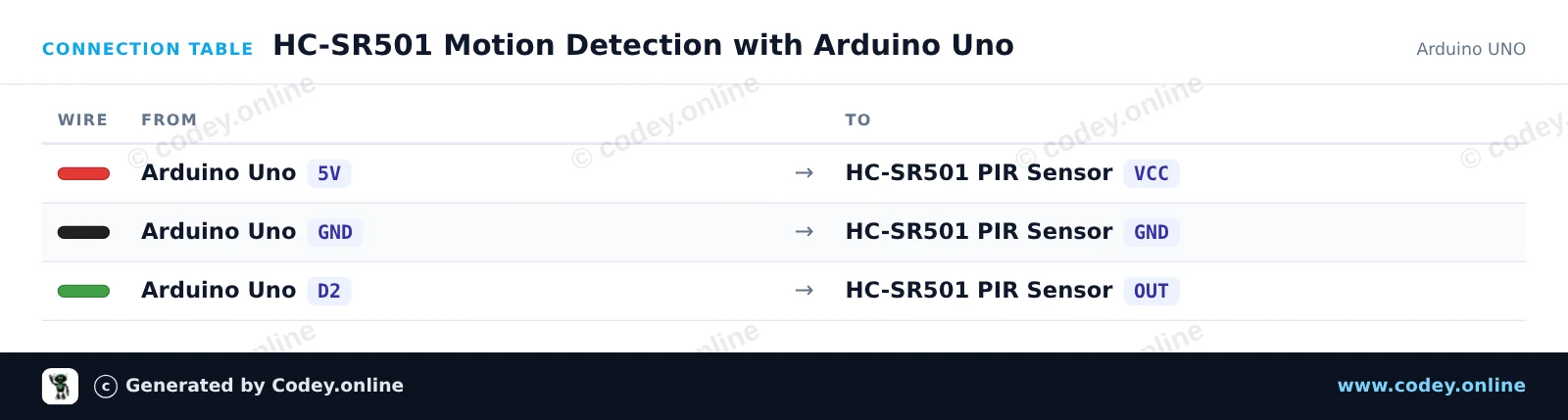
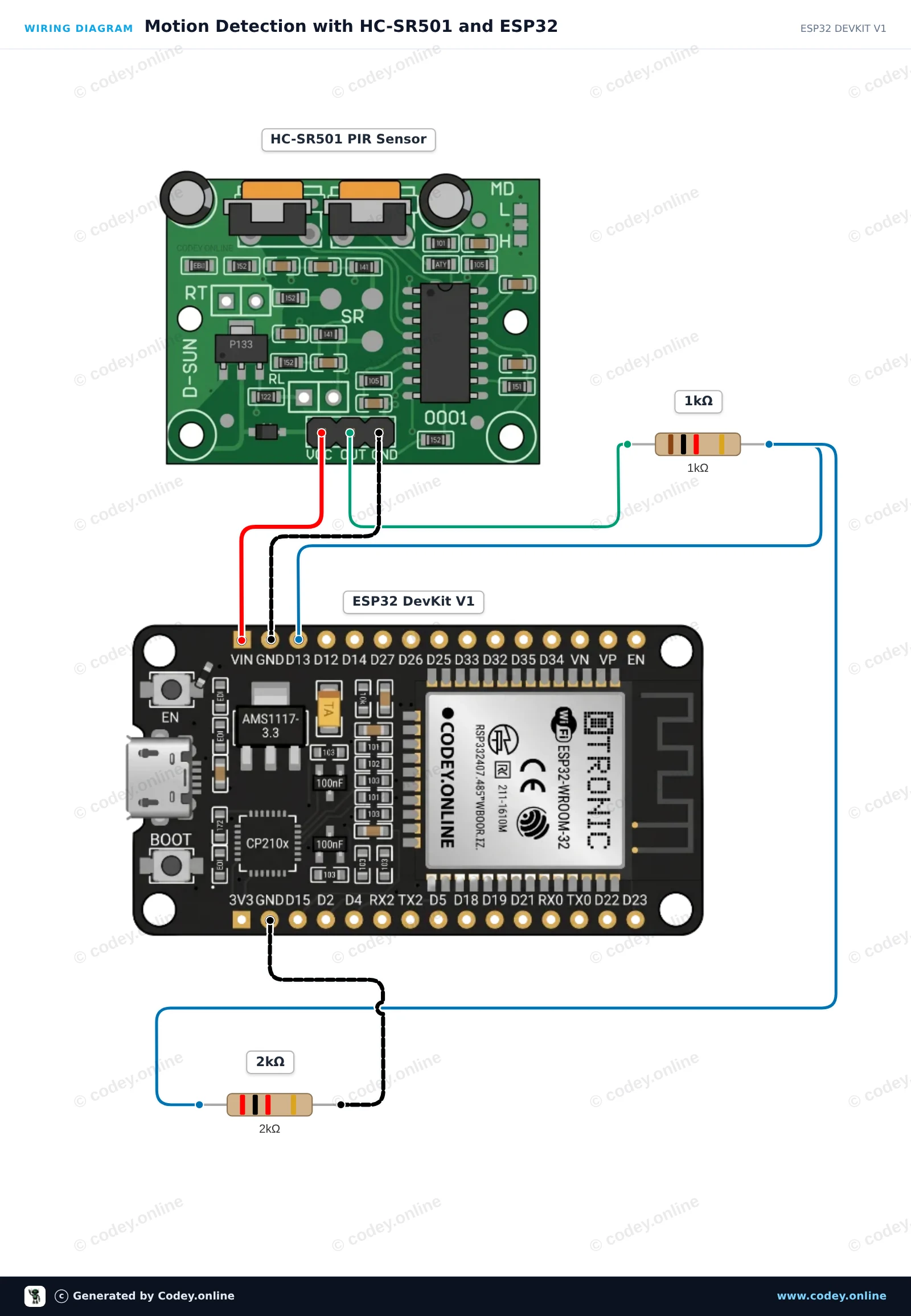
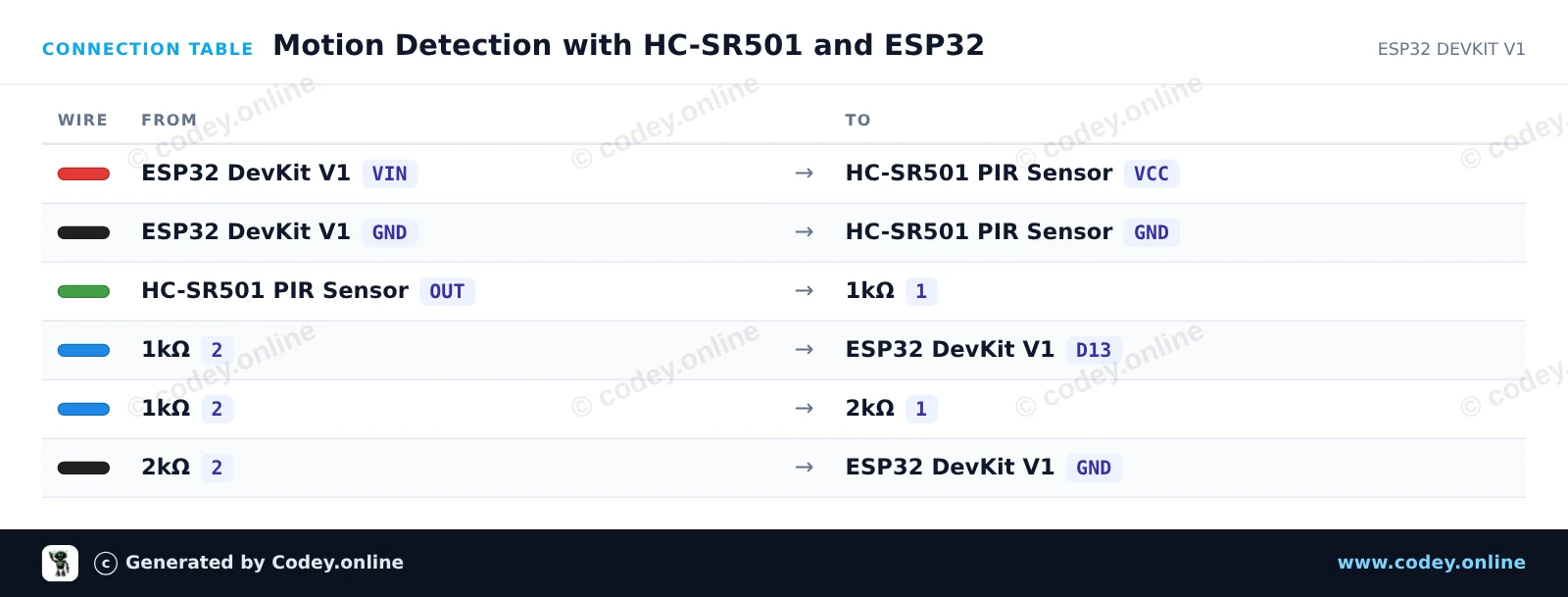
Voici comment connecter le Capteur PIR HC-SR501 capteur de mouvement à un Arduino UNO ou à un ESP32, avec un exemple de sketch que tu peux téléverser directement.
Ce projet détecte les mouvements humains à l'aide du capteur PIR HC-SR501. Lorsqu'un mouvement est détecté, la broche de sortie du capteur passe à HIGH, ce qui allume la LED intégrée et affiche une alerte dans le Serial Monitor. Ouvrez le Serial Monitor à 115200 baud pour voir l'état du mouvement en temps réel.
/*
 * ==================================================================
 *  Generated by Codey.online  —  https://www.codey.online
 * ==================================================================
 *  Project   : HC-SR501 Motion Detection with Arduino Uno
 *  Board     : Arduino UNO (arduino:avr:uno)
 *  Parts     : HC-SR501 PIR Motion Sensor
 *  Libraries : none (built-in)
 *
 *  Codey Online is an AI-powered browser IDE for Arduino and ESP32.
 *  Describe your project and Codey writes the code, draws the wiring
 *  diagram and uploads it to your board, straight from the browser.
 *  This code is free to use, modify and share, without warranty.
 * ==================================================================
 */

// HC-SR501 PIR Motion Sensor Demo

const int PIR_PIN = 2;
const int LED_PIN = 13;

int lastState = LOW;

void setup() {
  pinMode(PIR_PIN, INPUT);
  pinMode(LED_PIN, OUTPUT);

  Serial.begin(115200);
  Serial.println(F("HC-SR501 PIR Motion Sensor Initialized"));
  Serial.println(F("Warming up sensor (approx. 30-60 seconds)..."));
}

void loop() {
  int motionState = digitalRead(PIR_PIN);

  if (motionState != lastState) {
    if (motionState == HIGH) {
      digitalWrite(LED_PIN, HIGH);
      Serial.println(F("Motion detected!"));
    } else {
      digitalWrite(LED_PIN, LOW);
      Serial.println(F("Motion ended."));
    }
    lastState = motionState;
  }

  delay(100);
}Wiring diagram and example code generated by Codey.online — https://www.codey.online
Ce projet détecte les mouvements à l'aide d'un capteur PIR HC-SR501. Le capteur est alimenté depuis la broche 5V VIN, et un diviseur de tension avec une résistance de 1kΩ/2kΩ permet d'adapter en toute sécurité la sortie du capteur à l'entrée 3.3V de l'ESP32. Lorsqu'un mouvement est détecté, la LED intégrée s'allume et une notification est envoyée au Serial Monitor.
/*
 * ==================================================================
 *  Generated by Codey.online  —  https://www.codey.online
 * ==================================================================
 *  Project   : Motion Detection with HC-SR501 and ESP32
 *  Board     : ESP32 DEVKIT V1 (esp32:esp32:esp32doit-devkit-v1)
 *  Parts     : HC-SR501 PIR Motion Sensor
 *  Libraries : none (built-in)
 *
 *  Codey Online is an AI-powered browser IDE for Arduino and ESP32.
 *  Describe your project and Codey writes the code, draws the wiring
 *  diagram and uploads it to your board, straight from the browser.
 *  This code is free to use, modify and share, without warranty.
 * ==================================================================
 */

// HC-SR501 PIR Motion Sensor Demo
const int PIR_PIN = 13;      // Connected to HC-SR501 OUT via divider
const int LED_PIN = 2;       // Onboard LED

int lastState = LOW;

void setup() {
  Serial.begin(115200);
  pinMode(PIR_PIN, INPUT);
  pinMode(LED_PIN, OUTPUT);

  Serial.println("HC-SR501 Sensor warming up (approx. 30-60s)...");
  delay(2000);
  Serial.println("Ready to detect motion.");
}

void loop() {
  int motion = digitalRead(PIR_PIN);

  if (motion != lastState) {
    if (motion == HIGH) {
      digitalWrite(LED_PIN, HIGH);
      Serial.println("Motion detected!");
    } else {
      digitalWrite(LED_PIN, LOW);
      Serial.println("Motion ended.");
    }
    lastState = motion;
  }

  delay(50);
}Wiring diagram and example code generated by Codey.online — https://www.codey.online






 English
  Nederlands
  Deutsch
  Italiano
  Español
  Suomi
Suomi  Polski
  Dansk
Dansk  Ελληνικά
  Български
  Čeština
  Hrvatski
  Aileen